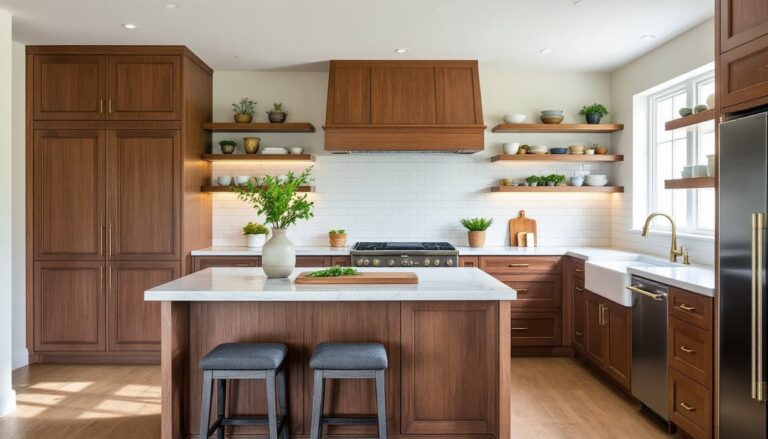

Choosing the right kitchen sink isn’t just about picking a basin that holds water. It’s a decision that affects workflow, resale value, and how the entire kitchen feels when someone walks in. A well-designed sink anchors the work triangle, handles daily wear, and sets the tone for cabinetry, countertops, and fixtures around it. Whether remodeling from scratch or swapping out a worn fixture, understanding sink design, from mounting style to material performance, helps homeowners avoid costly mistakes and build a kitchen that works as hard as it looks.
Table of Contents
ToggleKey Takeaways
- Kitchen sink design impacts workflow, resale value, and overall kitchen aesthetics, making it a critical decision beyond just functionality.
- Undermount sinks offer seamless visuals and easier cleanup but require stone or solid-surface countertops and professional installation, while drop-in sinks work with any material and are DIY-friendly.
- Stainless steel is the most versatile and affordable option, but 18-gauge thickness and sound-dampening features are essential to prevent denting and noise.
- Sink size and configuration should match household usage patterns—single-bowl designs maximize space for large items, while double-bowl sinks with 60/40 splits offer balanced flexibility.
- Proper sink depth (9–10 inches standard) reduces splatter and accommodates large cookware, while apron-front farmhouse sinks require cabinet modifications but deliver visual impact.
- Coordinate sink finish, material, and mounting style with your kitchen’s overall design aesthetic and surrounding fixtures to avoid costly mistakes and ensure long-term satisfaction.
Why Kitchen Sink Design Matters More Than You Think
The kitchen sink sees more action than any other fixture in the house, prep work, cleanup, hand washing, and often doubled as a staging area for dirty dishes. Poor sink design creates bottlenecks: narrow basins that can’t fit a sheet pan, shallow bowls that splash water onto counters, or configurations that force awkward elbow angles during meal prep.
Functionality drives design. A sink that’s too small for the household’s cooking habits leads to frustration: one that’s oversized eats into valuable counter space. Depth matters, most standard sinks run 8 to 10 inches deep, but undermount models often go deeper, reducing splatter and accommodating large stockpots without tilting.
Resale impact is real. According to kitchen design research, dated or mismatched sinks can drag down a kitchen’s perceived value faster than old appliances. Buyers notice cracked porcelain, rusted edges, or poorly sealed drop-ins. A clean, modern sink signals that the kitchen has been maintained.
Beyond aesthetics, sink design intersects with plumbing and countertop installation. An undermount sink requires solid-surface or stone counters and professional templating: a drop-in works with laminate but shows a visible rim. Choosing the wrong type mid-renovation can mean re-ordering countertops or hiring a plumber for extra cutouts.
Popular Kitchen Sink Styles and Materials
Undermount vs. Drop-In Sinks
Undermount sinks mount beneath the countertop, leaving the counter edge exposed. This style creates a seamless look, makes wiping crumbs directly into the basin easy, and works best with granite, quartz, or solid-surface counters. Installation requires a fabricator to polish the cutout edge and seal the sink from below using silicone and mechanical clips. Undermounts cost more upfront and demand watertight sealing, if the seal fails, water seeps into cabinetry.
Drop-in (or top-mount) sinks rest on top of the counter with a visible rim that overlaps the cutout. They’re easier to install (homeowners can often do it themselves with a jigsaw and caulk), compatible with any countertop material including laminate, and simpler to replace. The trade-off: the rim collects grime and interrupts the visual flow. For budget-conscious DIYers or laminate counters, drop-ins are the practical choice.
Stainless Steel, Porcelain, and Composite Options
Stainless steel dominates for good reason. It resists stains, heat, and impacts, costs less than most alternatives, and pairs with any design style. Look for 18-gauge steel (thicker and quieter than 20- or 22-gauge) and a satin or brushed finish to hide scratches. Cheap stainless dents easily and amplifies noise, sound-dampening pads or undercoating help. Stainless works in farmhouse, modern, and industrial kitchens but can feel cold in traditional spaces.
Porcelain (fireclay or enameled cast iron) offers a classic, high-gloss finish in white or colors. Fireclay sinks are kiln-fired ceramic, extremely durable, and resistant to chips, popular in farmhouse apron-front styles. Enameled cast iron is heavy (requires reinforced cabinets), prone to chipping if a heavy pot drops, and the enamel can wear over decades. Both show scratches from metal utensils and require gentle cleaners. They suit traditional or vintage kitchen designs where a statement sink anchors the aesthetic.
Composite (granite or quartz composite) blends crushed stone with acrylic resin, offering the heft and look of natural stone with better stain and scratch resistance. Composite sinks come in varied colors to match or contrast countertops, resist heat up to around 535°F, and muffle sound better than stainless. They’re heavier than steel, cost more, and can show water spots unless wiped dry. They’re ideal for modern or transitional kitchens where color coordination matters.
Choosing the Right Size and Configuration
Sink width should fit the base cabinet with clearance for mounting hardware. Standard cabinets are 30, 33, or 36 inches wide: the sink should be at least 3 inches narrower than the cabinet interior to avoid stress on cabinet walls. A 33-inch sink in a 36-inch cabinet is a common, safe pairing.
Single-bowl vs. double-bowl comes down to how the kitchen gets used. Single-bowl sinks (typically 30 to 36 inches wide) offer unobstructed space for large roasting pans, cookie sheets, and oversized pots. They’re popular in smaller kitchens where counter space is tight and a dishwasher handles most dish duty. Double-bowl sinks (with a divider splitting the basin into two sections) let someone rinse vegetables in one side while stacking dishes in the other. A 60/40 split (one larger, one smaller bowl) balances flexibility with capacity better than a 50/50 split.
Depth affects both comfort and function. Shallow sinks (7 to 8 inches) reduce bending for shorter users but splash more. Deeper sinks (9 to 10 inches, or up to 12 inches in farmhouse styles) contain splatter and hide dirty dishes but can strain the back during extended use. Standard countertop height is 36 inches: a 10-inch-deep sink puts the basin floor at 26 inches, which works for most adults.
Apron-front (farmhouse) sinks extend past the cabinet face, exposing the front panel. They require specialized cabinetry with a cutout or reinforced false front and add several inches of depth. Installation isn’t a simple swap, expect cabinet modifications and potentially new countertops. But when selecting standout fixtures, farmhouse sinks deliver visual impact and ergonomic benefits by reducing reach distance.
Design Features That Enhance Functionality
Integrated drainboards (a sloped or ridged area beside the basin) let dishes air-dry without a separate rack, saving counter space. They’re common in European designs and single-bowl stainless models. The trade-off: the drainboard takes up sink real estate and can be harder to clean.
Low dividers (or offset drains) in double-bowl sinks allow oversized items to span both basins while still separating zones. Look for dividers that sit several inches below the rim rather than running the full height.
Rear-set drains push the drain toward the back of the sink, freeing up clearance below for garbage disposals, compost bins, or undersink storage. Many undermount sinks now offer this configuration as standard.
Sound dampening matters in stainless steel sinks. Expect either rubberized undercoating or foam pads bonded to the underside. Without it, every dish and stream of water rings through the kitchen. Higher-end models include both.
Pre-drilled faucet holes vs. no-hole designs depend on the faucet choice. Undermounts often skip pre-drilled holes, letting the faucet mount through the countertop or wall, offering cleaner lines but requiring countertop drilling or wall plumbing (which may need permit inspection if rerouting supply lines). Drop-ins usually come with 1, 3, or 4 pre-drilled holes for faucet and accessories like soap dispensers or sprayers.
Accessories such as cutting boards, colanders, and drying racks that rest on the sink rim add workspace. They’re popular in workstation-style sinks designed around multi-tasking. Measure the interior sink dimensions before buying accessories, most are brand-specific or require exact sizing.
Matching Your Sink to Your Kitchen Style
Modern and minimalist kitchens lean toward undermount stainless or black composite sinks with clean lines, square corners, and integrated ledges for accessories. Skip decorative aprons or colored porcelain, stick with neutral tones and flush mounting.
Farmhouse and country kitchens almost demand an apron-front sink, typically white fireclay or enameled cast iron. Pair it with bridge-style or gooseneck faucets in oil-rubbed bronze or matte black. The sink becomes the focal point, so choose a finish that can handle the visual weight.
Traditional kitchens work well with double-bowl drop-ins in porcelain or stainless, especially if cabinetry is raised-panel wood. Polished chrome or brushed nickel faucets complete the look without competing.
Industrial styles thrive on stainless, often in commercial-grade, deep single bowls with exposed aprons or wall-mounted faucets. Look for heavier-gauge steel and utilitarian accessories like pull-down sprayers and magnetic soap holders.
Transitional kitchens (blending modern and traditional) benefit from undermount composite or stainless in softer colors, grays, taupes, or matte blacks, that bridge cabinet finishes and countertop materials.
Eventually, the sink should feel like it belongs, not like it was picked from a leftover bin. If the faucet, cabinet hardware, and lighting are warm metals, a stainless sink should be brushed, not mirror-polished. If countertops are bold (dark granite, veined quartz), a neutral sink keeps the visual balance. Most design missteps come from ignoring the finish and scale relationship between the sink and surrounding elements.