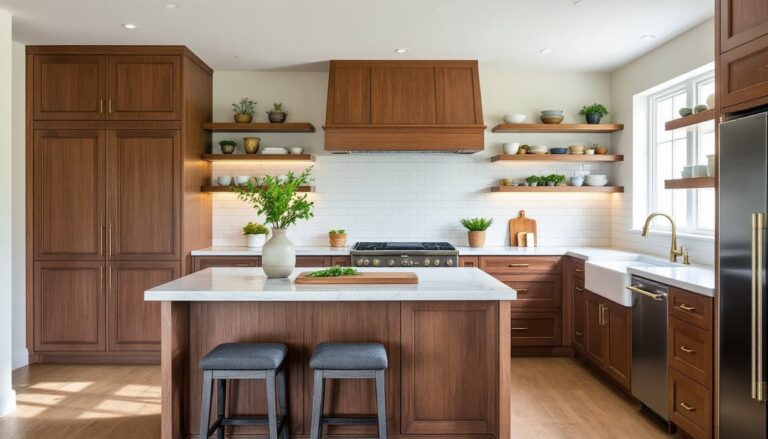

Contemporary kitchen cabinets strip away the ornate trim and fussy details that defined older styles, leaving clean lines, smooth surfaces, and a focus on function. If you’re planning a kitchen remodel or even a cabinet refresh, understanding what makes contemporary design work, and how it differs from traditional or transitional styles, will help you make choices that hold up over time. This guide walks through the defining features, materials, finishes, and layout considerations for contemporary cabinets, so you can plan confidently and avoid costly mistakes.
Table of Contents
ToggleKey Takeaways
- Contemporary kitchen cabinets prioritize clean lines, flat slab doors, and frameless construction over ornate decoration, maximizing storage space and creating a seamless, functional aesthetic.
- Handleless designs using push-to-open latches, integrated J-channels, or recessed pulls define the contemporary look, though proper installation and alignment are essential for durability.
- High-gloss acrylic, wood veneers, matte laminate, and painted MDF are the most durable and visually appealing materials for contemporary cabinets, with rift-cut walnut and white oak offering warmth without busy grain patterns.
- Restrained color palettes featuring whites, grays, warm wood tones, and strategic two-tone combinations prevent visual clutter while maintaining the minimalist contemporary kitchen aesthetic.
- Smart layout planning—including shallow upper cabinets in galley kitchens, pull-out corner solutions, and ceiling-height pantry units—ensures contemporary cabinets maximize efficiency and storage in your specific space.
What Defines Contemporary Kitchen Cabinets?
Contemporary kitchen cabinets are defined by minimalism, horizontal lines, and an emphasis on material quality over decoration. They typically feature frameless construction (also called full-overlay), where doors cover the entire cabinet box face, eliminating the face frame common in traditional American cabinets. This European-style build maximizes interior storage space and creates seamless door alignment.
The look prioritizes geometric simplicity. Cabinet doors are flat or slab-style, without raised panels, beadboard, or applied molding. When handles appear, they’re either sleek bar pulls or recessed channels. Many contemporary designs skip visible hardware entirely, using push-to-open mechanisms or integrated edge pulls.
Contemporary design isn’t the same as “modern,” though people use the terms interchangeably. Technically, modern refers to mid-century aesthetics (think 1950s-70s). Contemporary is what’s current, it borrows from modern, industrial, and Scandinavian influences but evolves with trends. In 2026, that means more mixed materials, warmer tones alongside cool neutrals, and smarter storage integration like hidden charging stations or pull-out pantries with built-in lighting.
Key Design Features of Contemporary Cabinets
Contemporary kitchen cabinets design leans on a few signature elements that create the style’s signature look.
Flat-panel (slab) doors are the backbone. These are single-piece door fronts with no routing, profiling, or overlay. The grain (if wood) runs clean and uninterrupted, or the surface is solid color if using laminate or acrylic. This simplicity makes the cabinet finish and hardware choices the focal points.
Horizontal grain orientation is increasingly popular, especially with wood veneers like walnut or oak. Running the grain sideways emphasizes width and creates visual calm, a trick borrowed from midcentury modern furniture that works especially well in galley or single-wall kitchens.
Handleless designs dominate contemporary cabinetry. Options include:
- Push-to-open latches: Spring-loaded hardware that releases with a light press. Works well on upper cabinets and islands, but requires adjustment after a year or two as springs wear.
- Integrated pulls (J-channels or edge profiles): Routed grooves along the top or side edge of doors and drawers. These need careful installation to align properly and are harder to retrofit.
- Recessed pulls: Milled pockets in the door face itself. Clean look but collects dust and crumbs if placed on base cabinets.
Minimalist crown and base molding (or none at all). Contemporary cabinets often run flush to the ceiling or leave a deliberate gap with a recessed lighting channel. Base cabinets sit on a recessed toe kick (standard 4 inches high), sometimes with LED strip lighting tucked underneath. Skip the ornate crown, if you add trim, use a simple square profile in ¾-inch or 1-inch thickness.
Popular Materials and Finishes for Contemporary Kitchen Cabinets
Material choice affects not just appearance but durability, cost, and ease of maintenance.
High-gloss acrylic or lacquer delivers the ultra-smooth, reflective finish associated with contemporary European kitchens. Acrylic panels are thermoformed over MDF substrate, creating seamless, wipeable surfaces. They resist moisture better than paint but show fingerprints and scratches more readily. Lacquer is a sprayed finish that can be polished to high gloss or kept matte: it’s more prone to chipping at edges.
Wood veneer over plywood offers warmth without busy grain. White oak, walnut, and rift-cut maple are common. Rift-cut means the veneer is sliced to minimize grain figure, giving a subtle, linear look. If you’re DIYing or working with a local cabinet maker, specify ¾-inch plywood for boxes and ½-inch or ¾-inch veneer-core plywood for doors. Avoid particleboard core on doors, it telegraphs imperfections and sags over time.
Matte or satin laminate is budget-friendly and durable. Brands like Wilsonart and Formica offer textured laminates that mimic concrete, linen, or brushed metal. Laminate resists heat and stains better than paint, and damaged panels can be replaced without refinishing the entire kitchen. Just keep edges sealed, moisture infiltration at seams will cause swelling.
Painted MDF remains a workhorse for contemporary cabinet doors. Medium-density fiberboard takes paint beautifully and stays flat. For a contemporary aesthetic, request a catalyzed conversion varnish topcoat in matte or satin sheen, not semi-gloss. This finish is more durable than standard latex and resists yellowing.
Metal accents are creeping into contemporary kitchens as statement elements in modern interiors. Stainless steel drawer fronts, blackened steel frames around glass uppers, or brass-clad islands add contrast without clutter.
Color Palettes That Elevate Contemporary Cabinet Design
Contemporary kitchens favor restrained palettes, but “neutral” doesn’t mean boring.
Whites and off-whites remain dominant. Pure white (Benjamin Moore Simply White or Sherwin-Williams Pure White) works in high-light spaces but can feel sterile. Off-whites with gray or greige undertones (SW Alabaster, BM White Dove) add softness. Pair white uppers with a darker base or island to ground the space.
Grays range from cool charcoal to warm greige. SW Repose Gray and BM Classic Gray are popular mid-tones that don’t skew blue or purple in changing light. Deep charcoal or graphite works well as an accent color on an island or a single wall of cabinets.
Black cabinets are bold but require commitment. Matte black hides fingerprints better than gloss. Use black strategically, on a single bank of cabinets or a pantry wall, and balance it with lighter countertops and backsplashes. Poor lighting will make black cabinets feel oppressive.
Warm wood tones are surging in 2026, especially white oak with a clear or natural oil finish, and walnut in medium to dark stains. These bring warmth without pattern, complementing concrete or quartz countertops.
Two-tone combinations add depth without busy-ness. Common pairings:
- White uppers + wood or gray base cabinets
- Gray perimeter + wood or black island
- All white cabinets + wood open shelving or hood surround
Avoid three or more cabinet colors in one kitchen unless you’re working with a designer. It’s easy to tip into visual clutter.
Hardware and Handle Options for a Sleek Contemporary Look
Hardware can reinforce or undermine a contemporary aesthetic. When in doubt, less is more.
Integrated pulls (J-channels or edge grooves) offer the cleanest look. These are routed into the top or side edge of doors and drawer fronts. Top-edge pulls work on wall cabinets and drawers: side-edge pulls work on tall cabinets and some base doors. Installation requires precise alignment, doors must be hung with consistent reveals, or the groove won’t line up.
Slim bar pulls in brushed stainless, matte black, or brushed brass are versatile. Choose a profile no thicker than ⅜ inch in diameter and a length proportional to the door width. A 12-inch pull suits a 24-inch door: a 6-inch pull works on 15–18-inch doors. Mount pulls horizontally on drawers and upper cabinets, vertically on base cabinet doors.
Square or rectangular edge pulls offer a modern, architectural feel. These are often aluminum or stainless and mount flush to the door edge. They’re especially popular on European-style cabinets.
Leather or fabric pulls add an unexpected tactile element and are cropping up in contemporary design projects focused on Scandinavian or organic minimalism. They soften the hard surfaces but require occasional replacement as they wear.
Skip anything ornate, brushed nickel with decorative backplates, or glass knobs, they read traditional. If you’re retrofitting hardware on existing slab doors, fill old holes with color-matched wood filler or two-part epoxy, sand flush, and repaint or refinish before drilling new holes. Misaligned holes are obvious on flat doors.
How to Choose Contemporary Cabinets for Your Kitchen Layout
Layout drives function, and contemporary design thrives on efficient use of space.
For galley kitchens: Use handleless uppers to avoid protruding hardware in tight walkways. Keep upper cabinets shallow (12 inches deep instead of the standard 14 inches) if the galley is narrow. Consider open shelving on one wall to lighten the visual weight.
For L-shaped and U-shaped kitchens: Maximize corner storage with pull-out blind corner units or LeMans-style rotating shelves. Contemporary cabinets don’t rely on decorative corner solutions like lazy Susans with turned posts. If you’re DIYing, pull-out units require heavy-duty full-extension slides rated for 100+ pounds.
For islands: Contemporary islands often feature waterfall-edge countertops (where the countertop material runs vertically down the sides) and open or mixed storage. Consider leaving one side open for seating with knee space (15 inches deep minimum) and using the opposite side for cabinets or drawers.
For open-plan spaces: Keep sightlines clean by eliminating upper cabinets on one wall or using full-height floor-to-ceiling pantry cabinets instead. Contemporary kitchens favor vertical storage over scattered upper cabinets. If you have a structural column or bulkhead, box it in with matching cabinet panels rather than leaving it exposed.
Tall cabinets and pantry units should run to the ceiling (typically 90–96 inches depending on ceiling height). Use the top for infrequently accessed items. Install interior LED strip lighting on pull-out shelves, it’s easier to add during construction than retrofit.
Appliance integration is key. Panel-ready refrigerators and dishwashers blend into cabinet runs. If budget doesn’t allow full integration, choose appliances in stainless steel, black stainless, or matte black that harmonize with the cabinet finish. Avoid mismatched stainless appliances with visible branding, contemporary design values subtlety.
Conclusion
Contemporary kitchen cabinets deliver lasting style by prioritizing clean lines, quality materials, and smart layout over trendy embellishments. Whether you’re going full frameless European or adapting contemporary details to a more modest refresh, the principles hold: flat doors, minimal hardware, restrained color, and thoughtful storage. Measure twice, plan for your layout’s quirks, and invest in finishes that can take daily use. Done right, contemporary cabinets age gracefully, and save you from a dated kitchen five years down the line.