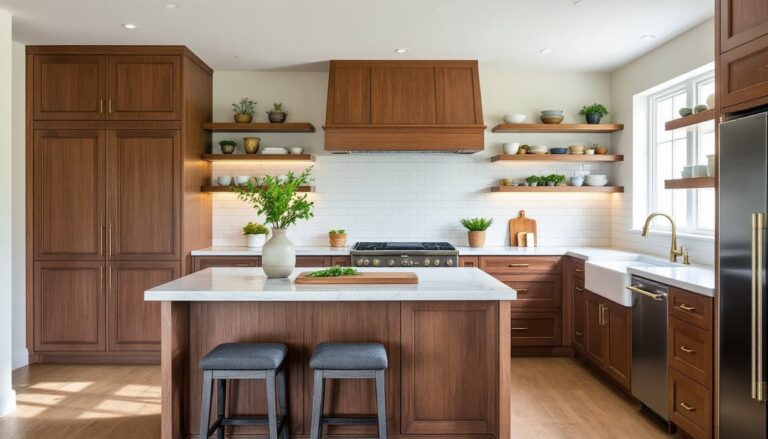

Mediterranean kitchen design brings the warmth of sun-drenched coastlines into the heart of a home. Rooted in the architectural traditions of Spain, Italy, Greece, and Southern France, this style balances rustic charm with functional elegance. It’s not about recreating a villa in Tuscany, it’s about borrowing the color palettes, materials, and textures that make those spaces feel welcoming and lived-in. Whether someone’s planning a full remodel or layering in Mediterranean touches through finishes and fixtures, the fundamentals remain the same: natural materials, earthy tones, and a focus on light.
Table of Contents
ToggleKey Takeaways
- Mediterranean kitchen design centers on natural materials like stone, terracotta tile, and distressed wood paired with warm, earthy color palettes inspired by coastal landscapes.
- Core design elements include open layouts, arched openings, decorative tilework, and intentionally imperfect finishes that celebrate handmade craftsmanship over factory precision.
- Warm whites, creams, and earth tones form the foundation, while soft blues, greens, and terracotta accents bring in coastal and landscape references without jarring contrast.
- Wood cabinets with visible grain, open shelving, and glass-front doors offer practical storage while maintaining visual lightness and the ability to display ceramics and dishware.
- Wrought iron hardware, hand-forged fixtures, and warm-white lighting (2700K-3000K) complete the Mediterranean aesthetic while ensuring proper functionality and electrical safety.
What Defines Mediterranean Kitchen Design?
Mediterranean kitchens share a few core characteristics that set them apart from farmhouse, contemporary, or traditional American styles. The look is warm, layered, and deliberately imperfect, think hand-plastered walls, uneven tiles, and visible wood grain.
Natural materials dominate. Stone countertops, terracotta or ceramic tile floors, and stucco or plaster wall finishes are standard. Wood appears in ceiling beams, open shelving, and cabinetry, often with a distressed or hand-scraped finish that shows age and character.
The layout tends to be open and social. Islands are common, often topped with thick stone slabs. Cooking zones feel accessible, not tucked away. This isn’t a style that hides the kitchen behind closed doors.
Arched openings and curved lines soften the architecture. Doorways, windows, and even range hoods often feature gentle curves instead of sharp angles. If the existing structure doesn’t support arches, even rounded cabinet details or a curved tile backsplash can introduce the vibe.
Decorative tilework plays a big role. Patterned ceramic tiles, especially hand-painted varieties, show up on backsplashes, countertops, and floors. Mosaics, Moroccan zellige, and Spanish azulejos all fit the aesthetic.
Finally, there’s an emphasis on craftsmanship over perfection. Mediterranean design celebrates the handmade. Cabinets don’t need to be factory-smooth: countertops can have natural veining and pits. That worn-in quality is part of the appeal.
Essential Color Palettes for a Mediterranean Kitchen
Color choices anchor the Mediterranean look. The palette pulls directly from coastal landscapes: sun-bleached stone, azure water, terracotta roofs, and olive groves.
Warm whites and creams form the foundation. Off-white plaster walls, cream cabinetry, and beige stone create a neutral base that reflects light without feeling sterile. These aren’t cool grays or bright whites, they lean slightly yellow or peachy.
Earth tones add warmth. Terracotta, ochre, burnt sienna, and clay colors show up in tile, painted accents, or cabinetry stains. These warm browns and oranges ground the space and pair well with natural wood.
Blues bring in the coastal element. Soft sky blues, turquoise, and cobalt work as accent colors on backsplashes, painted cabinet doors, or decorative tile. Mediterranean blues are saturated but not garish, they feel weathered, like painted shutters that have seen a few summers.
Greens reference the surrounding landscape. Olive green, sage, and muted mint can appear in painted finishes or as tile accents. These aren’t bright or tropical greens: they’re dusty and subdued.
Contrast is subtle. Instead of stark black-and-white schemes, Mediterranean kitchens layer tones within the same warm family. A cream wall might sit next to a honey-toned wood beam and a tan stone countertop. The overall effect is cohesive, not jarring.
For DIYers painting cabinets or walls, look for paint with a flat or matte finish rather than high gloss. The goal is a soft, chalky appearance that mimics aged plaster. Brands like Farrow & Ball, Benjamin Moore’s Aura line, or Sherwin-Williams’ Emerald Matte deliver that look, though any quality interior paint in a matte sheen works if the color is right.
Key Materials and Textures
Materials define Mediterranean design more than any other element. The right combination of stone, tile, wood, and metal creates the layered, tactile feel that makes these kitchens memorable.
Natural Stone and Tile
Countertops in Mediterranean kitchens often use natural stone. Travertine, limestone, and marble are traditional choices. Travertine has a porous, textured surface with natural pitting, not a flaw, but a feature. Limestone offers a softer, matte finish. Marble brings elegance but requires sealing and regular maintenance: it’s best reserved for low-traffic prep areas or islands.
For a more budget-friendly option, soapstone or honed granite work well. Both have a matte finish that aligns with the aesthetic. Polished granite and quartz, while durable, look too contemporary unless specified in a leathered or honed finish.
Backsplashes are where decorative tile shines. Hand-painted ceramic tiles, Moroccan zellige (glazed terracotta tiles with irregular surfaces), and Spanish azulejos (tin-glazed ceramic tiles) all fit. Patterns can be intricate or simple, but they should feel handmade. Installation is straightforward for anyone comfortable with thinset and grout: use a notched trowel (typically 1/4″ x 1/4″ for wall tile) and spacers to keep grout lines consistent.
Flooring leans toward terracotta, saltillo tile, or stone. Terracotta tiles are unglazed clay, typically 12″x12″ squares, laid in a grid or diagonal pattern. They’re porous and need sealing with a penetrating sealer, plan on two coats initially, then resealing every 1-2 years depending on traffic. Saltillo tiles have more color variation and a rougher surface. Both are heavy: make sure the subfloor can handle the load (consult local building codes if installing over a wood subfloor).
Ceramic or porcelain tiles that mimic terracotta or stone offer easier maintenance and work over radiant heat systems without the weight or sealing requirements.
Wood and Wrought Iron Accents
Exposed wood beams add rustic character. If the ceiling structure allows, sistering decorative beams to existing joists creates the look without structural modification. Use reclaimed or distressed lumber, rough-sawn cedar, Douglas fir, or oak work well. Beams can be stained dark or left natural: avoid glossy finishes. Attach with heavy-duty lag screws into ceiling joists (locate with a stud finder). This is a two-person job: beams are heavy and awkward to maneuver.
Cabinets and shelving often incorporate solid wood with visible grain. Knotty alder, pine, and oak are common. Finishes are typically hand-rubbed oil or low-sheen stain rather than high-gloss lacquer. Open shelving in wood provides both storage and a place to display ceramics or glassware.
Wrought iron appears in hardware, pot racks, light fixtures, and decorative brackets. The metal should look hand-forged, with slight irregularities and a matte black or oil-rubbed bronze finish. Avoid shiny chrome or brushed nickel, those read too modern. Iron hardware is heavier than typical cabinet pulls: make sure screws penetrate into solid wood, not just the cabinet face veneer.
Cabinetry and Storage Solutions
Mediterranean cabinetry balances function with old-world charm. The style doesn’t favor sleek, handleless cabinets or uniform rows of upper cabinets. Instead, it mixes closed storage with open shelving and glass-front doors.
Cabinet construction typically uses solid wood face frames and raised or flat-panel doors. Inset or partial-overlay door styles work better than full-overlay frameless (European-style) cabinets. If building custom or semi-custom, specify mortise-and-tenon joinery for durability.
Finishes lean toward distressed or glazed paint, natural wood stains, or a two-tone approach. A common layout pairs cream or white lower cabinets with natural wood uppers, or painted uppers with stained lowers. Kitchen design ideas often showcase this balance between lighter and warmer tones.
Open shelving is a signature element. Floating shelves or brackets supporting thick wood planks replace some upper cabinets. This isn’t just decorative, it’s practical for frequently used items like dishes, glasses, and oils. Install shelves into wall studs using heavy-duty brackets rated for the load. For a 12″ deep shelf holding dishware, assume at least 50 lbs per linear foot and use brackets every 24-32″.
Glass-front cabinet doors add visual lightness while keeping contents dust-free. Mullion patterns (the dividers within the glass panel) can be simple or geometric. For a DIY retrofit, replacing solid cabinet doors with glass-panel versions is manageable if the door frames are already routed for panels. Otherwise, ordering custom glass doors from a cabinet supplier is more practical than cutting and routing on-site.
Hood enclosures are often custom-built and finished with plaster, tile, or wood. A stucco or Venetian plaster hood painted to match the walls creates a seamless, integrated look. For a DIY build, frame the hood enclosure with 2×4 studs over the range (ensuring proper clearance per the range manufacturer’s specs, typically 24-30″ above the cooktop for gas ranges). Sheath with cement board, then finish with plaster or tile. Make sure the actual range hood insert vents properly: recirculating hoods don’t meet code in many jurisdictions for gas ranges.
Hardware should feel substantial. Wrought iron pulls, bin pulls, or cup pulls in black or bronze work well. Avoid tiny knobs or minimalist bar pulls, they’re too contemporary.
Lighting and Fixtures That Capture the Mediterranean Spirit
Lighting in Mediterranean kitchens layers ambient, task, and accent sources while maintaining a warm, inviting glow. Fixtures tend toward wrought iron, hand-blown glass, and ceramic rather than polished chrome or industrial steel.
Pendant lights over islands or tables are a focal point. Look for hand-forged iron chandeliers, ceramic pendants, or fixtures with amber or seeded glass shades. Multi-bulb designs with candelabra-style sockets create a softer light than single-bulb industrial pendants. Hang pendants 30-36″ above the island surface for adequate task lighting without blocking sightlines.
For wiring, standard junction boxes support most pendants up to 50 lbs: heavier wrought iron fixtures may require a ceiling fan-rated box or additional bracing. If unsure, consult a licensed electrician, improper support is a safety hazard.
Under-cabinet lighting provides task illumination for prep areas. LED strip lights or puck lights work, but choose a warm white color temperature (2700K-3000K) to match the Mediterranean palette. Cool white (4000K+) looks clinical and clashes with earthy tones.
Recessed can lights offer general ambient lighting but should be used sparingly. Mediterranean kitchens aren’t brightly lit like commercial spaces: the goal is warmth, not maximum lumens. Space recessed lights on a 4-6 foot grid and use dimmers to adjust intensity. According to the National Electrical Code (NEC), recessed fixtures in insulated ceilings must be IC-rated to prevent fire hazards.
Wall sconces flanking a range hood, sink, or doorway add decorative accent lighting. Iron or ceramic sconces with fabric or parchment shades diffuse light softly. These are typically hardwired: running new electrical for sconces in an existing kitchen requires cutting into drywall and possibly rerouting circuits. Many homeowners find modern kitchen inspiration by blending sconce styles into existing layouts. If that’s beyond comfort level, hire a licensed electrician.
Natural light is paramount. If possible, enlarge existing windows or add new ones (permits required for structural changes). Arched windows or French doors reinforce the style. Window treatments should be minimal, linen café curtains, wooden shutters, or simple iron rods with light fabric panels.
For a complete Mediterranean transformation, some homeowners explore kitchens with a Mediterranean vibe to see how lighting, color, and materials work together in real spaces.
Finally, don’t overlook the details. Switch plates and outlet covers in oil-rubbed bronze or wrought iron finish the look. Standard white plastic plates disrupt the aesthetic.